What happened
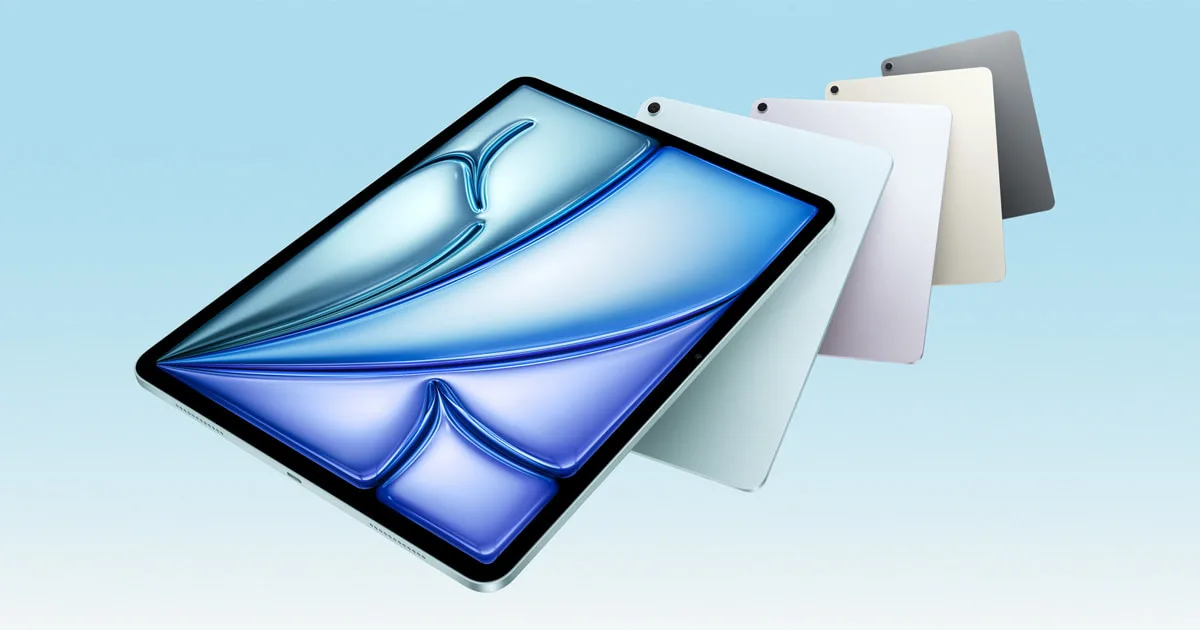
Apple's announcement set out a speed bump in the same body:
- M4 chip with an 8-core CPU and 9-core GPU. Apple claims it's up to 30% faster than the M3 Air and up to 2.3 times faster than the M1 model.
- 12GB of unified memory, up 50%, with 120GB/s of bandwidth.
- N1 wireless chip for Wi-Fi 7, Bluetooth 6 and Thread.
- C1X modem in the cellular versions, which Apple says gives up to 50% faster cellular data than the previous Air.
Prices at launch were $599 for the 11-inch Wi-Fi model and $799 for the 13-inch, with cellular adding $150. Storage ran from 128GB to 1TB, and the colours were blue, purple, starlight and space gray. Macworld's rundown lists what didn't change: the LCD Liquid Retina display, the 12MP cameras, battery life, the 128GB starting storage and support for Apple Pencil Pro and the Magic Keyboard.
What changed for buyers
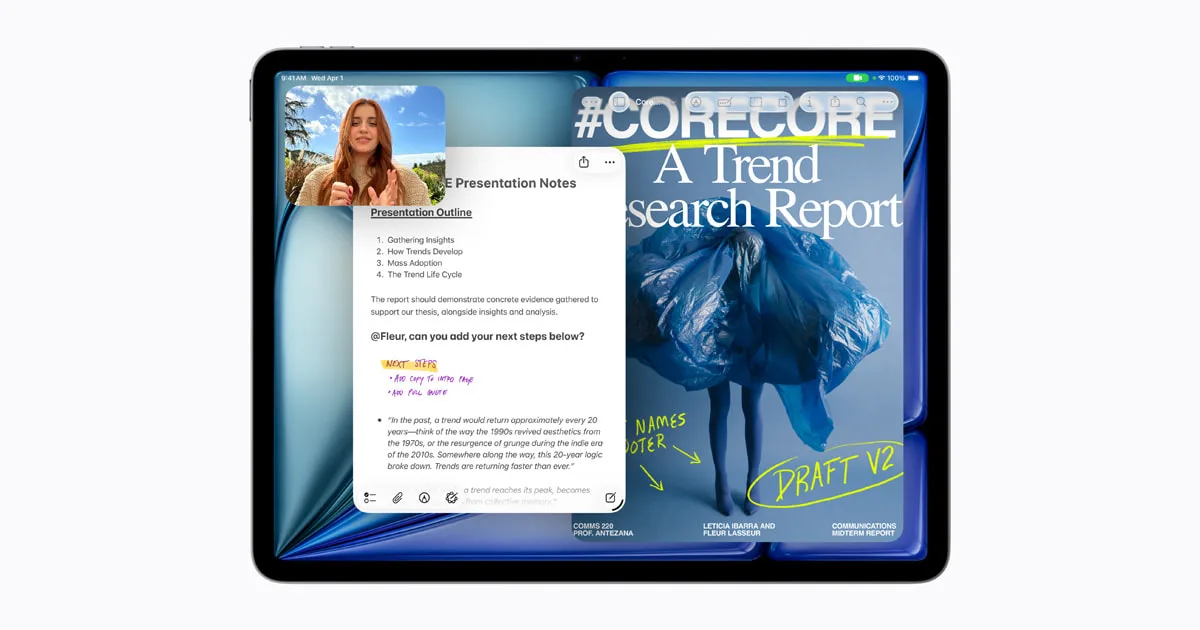
The memory is the part that matters. RAM is the spec that decides how many apps and browser tabs an iPad can keep open with iPadOS 26's new windowing system. An iPad is also hard to upgrade later, since you can't add memory after purchase. So more RAM at the same $599 was a better deal than the processor claims alone suggest. Tom's Guide led its coverage with the extra power and Wi-Fi 7.
For anyone with an M3 Air, there was little reason to switch. Same screen, same cameras and a modest speed gain. For owners of an M1 or older iPad Air, or a base iPad, the M4 model was a clear step up at a launch price Apple hadn't changed.
Where things stand now (November 2026)
The launch price didn't last. On June 25, Apple raised prices across Macs and iPads, blaming the cost of memory and storage chips. Apple said it had "never seen a component price increase this much, this quickly," ABC7 reported. The 11-inch iPad Air went from $599 to $749. According to our iPad Air page, the 13-inch now starts at $949, and the 11-inch with 256GB is $849.
The base iPad rose too, from $349 to $449. That's where the choice gets harder. The base iPad uses the older A16 chip, has Wi-Fi 6 and a USB 2 port, and doesn't support Apple Intelligence. The Air's M4 gets Apple Intelligence and the Siri AI beta, which Apple supports on iPads with M1 or later. It also gets Wi-Fi 7 and a faster USB-C port. The gap is now $300, up from $250 before June.
Other options have changed too. The new iPad mini, on sale since November 6 with an OLED screen and A20 Pro chip, starts at $699, only $50 below the 11-inch Air, in a smaller size. At the top end, the M5 iPad Pro is now $1,199.
The M4 Air is eight months old. A later Air with an OLED screen has been reported but not announced, so we wouldn't wait for it unless you're in no hurry.
Bottom line
The M4 iPad Air was a sensible update: same design, more memory and modern wireless chips. At $749 it no longer feels cheap. Pick it over the $449 iPad if you want Apple Intelligence and Siri AI, or plan to keep the tablet for many years. Pick the base iPad for streaming, browsing and schoolwork on a budget. Our compare tool and price tracker show current deals, and the buy-now guide covers timing.
Found something out of date? Tell us and we'll fix it and log the change on our corrections page.